Maths dictionary
Circles: radius, diameter, chord, circumference
The circle is probably the simplest shape we have: round, no corners, 360 degrees all the way round. Here are the names of its parts and the two formulas you need for it.
The circle is probably the simplest shape we have. A circle is a round shape, so it has no corners, with 360 degrees all the way round.
That's the whole shape, but a circle has a surprising number of named parts, and the two formulas we use for it each want a different one of those parts. So let's get the names straight first.
Centre, radius and diameter
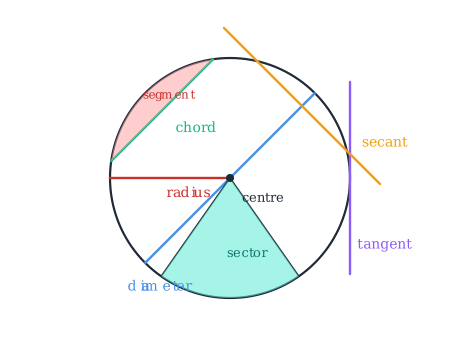
The middle of a circle we call the centre. From the centre it is the same distance out to every point on the edge of the circle. That edge we call the circumference. The same word is also used for the length all the way round, which we come back to below.
A line that goes from the centre out to the circumference we call a radius. If we let that line go all the way through the circle, from the circumference, through the centre and out to the circumference again, we call it a diameter. The diameter is actually the same as the radius times 2. After all, it's twice as long as the radius:
Chord, segment and sector
Besides the radius, the centre and the diameter, we also have a few other things in the circle.
As shown in the drawing we have the chord, which cuts off a segment. The chord goes from one place on the circumference to another place on the circumference. If the chord goes through the centre, it is actually the diameter.
Then there is the segment and the sector. The difference between a segment and a sector is that a sector is like a slice of pizza, cut out from the centre, whereas the segment is only the piece cut off by the chord, as shown in the figure.
Tangent and secant
On top of that we also have the tangent, which just touches the circle. That is what the word tangent means, and it is why it's called that. A tangent only touches the circle in 1 point. That is, the tangent doesn't cut the circle in more than 1 point.
A line that cuts the circle in exactly 2 places we call a secant. The secant and the chord can look alike, but the secant goes right through the circle and out the other side, whereas the chord only goes from circumference to circumference.
Area and circumference of a circle
The area of a circle we can find by multiplying pi () by the radius of the circle squared:
The circumference of a circle we can find by multiplying pi () by the diameter of the circle:
Since the diameter is the radius times 2, we can also write it as
Notice that the two formulas want different things. The area formula wants the radius, the circumference formula wants the diameter. Say we have a circle with a radius of 3:
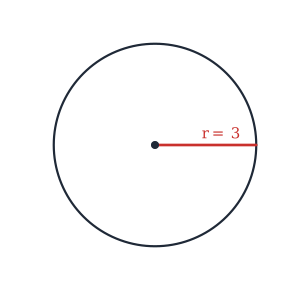
Its area is . Its circumference uses the diameter, which is , so the circumference is . Each calculation gets its own walkthrough: how to find the area of a circle and how to find the circumference of a circle. The area comes out in square units and the circumference in ordinary length units, because of how units multiply.
Going backwards: the radius from the area
If we look at the area formula, we can see that there are really only two unknown things in it, the area and the radius , because is a number we know (3.14...). So if a question gives us the area, we can find the radius, just by moving the formula around. That is its own guide: finding the radius of a circle from its area.
Common misunderstandings
- "A segment and a sector are the same thing." No. The sector is the slice of pizza, cut out from the centre. The segment is only the piece that a chord cuts off.
- "A secant is the same as a chord." They can look alike, but the secant goes through the circle and out the other side. The chord stops at the circumference at both ends.
- "The radius and the diameter are more or less the same thing." The diameter is exactly twice the radius. Mixing them up doubles or halves your answer.
- "You use the radius in both formulas." The area formula uses the radius, but the circumference formula uses the diameter. If you have the radius and want the circumference, you multiply by 2 first.
- "You can't calculate anything with π in it without a lot of decimals." π is just a number, about 3.14, and the calculator handles it in one line. Some questions even tell you to use π = 3, and then it all gets a good deal easier.
Related guides
Guides on this topic
Finding the radius of a circle from its area
The area formula only has two unknowns in it, the area and the radius, because π is just a number. So if a question gives you the area, you can work the formula backwards and find the radius.
How to find the area of a circle
The area of a circle is π times the radius squared. It is one formula, and the only thing to keep straight is that it wants the radius, not the diameter.
How to find the circumference of a circle
The circumference is π times the diameter. If you've only got the radius, you double it first, because the diameter is twice as long as the radius.
Frequently asked questions
Read next
Want to get good at maths?
Mathara explains every topic step by step with videos, exercises and personal feedback.
👉 Get started for free