Maths, explained so it makes sense
Look a concept up in the dictionary, or follow a guide step by step. Everything is written so it's actually easy to understand.
 4 min.
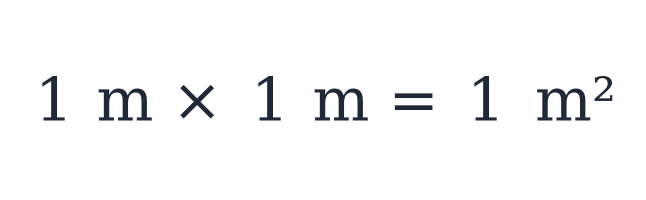
 Units: metres, square metres and cubic metres
A unit is a way of describing how much there is of something. When we multiply lengths, the units get multiplied too, and that is where square metres and cubic metres come from.
 4 min.
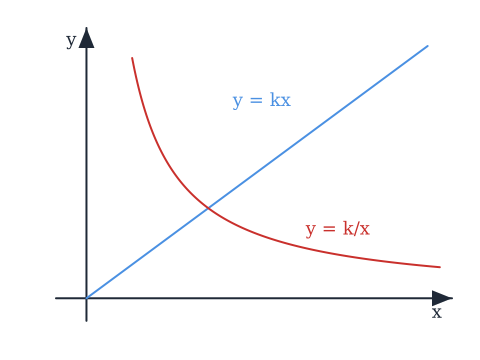
 What is proportion? Direct and inverse proportion
Proportion is a relationship between x and y where y grows in a very particular way. There are two kinds, direct (y = kx) and inverse (y = k/x), and here is what they mean.
 5 min.
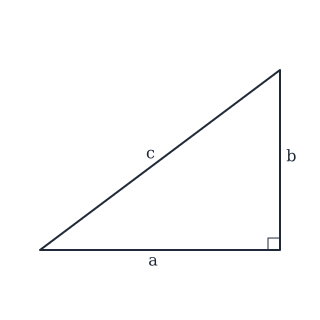
 Pythagoras' theorem
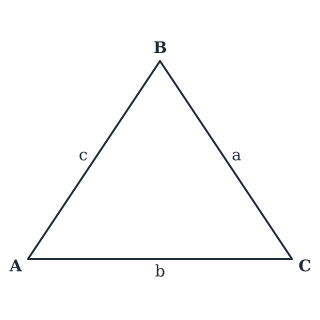
Pythagoras' theorem is a kind of formula that says how the side lengths in a right-angled triangle are related. Here is what a² + b² = c² means, with the sides named and one worked example.
 8 min.
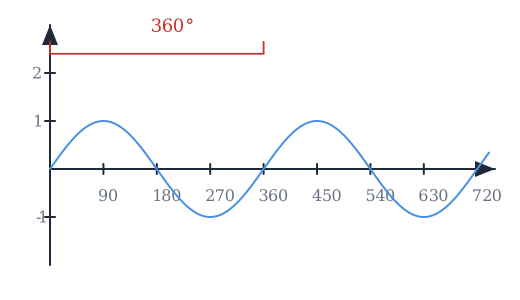
 The graphs of sine, cosine and tangent
The graphs of sine, cosine and tangent all come from the unit circle. Here is why sine makes a wave that repeats every 360 degrees, why cosine is the same wave shifted, and why tangent breaks apart at 90 degrees.
 6 min.
 Triangles: types, angles and properties
A triangle has three corners, three angles that always add up to 180 degrees, and a handful of names worth knowing. Here are the types of triangle, the special lines inside them, and the two circles that belong to every triangle.
 6 min.
 What is probability?
A probability is not a guess. It is the number of outcomes we want divided by the number of outcomes there are. Here is the short explanation with a dice, a drawer of socks and a coin.
 6 min.
 Quadratic functions and the parabola
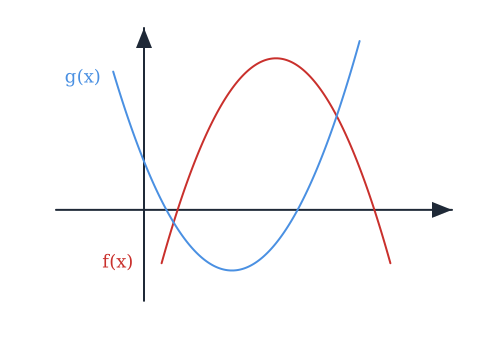
A quadratic function is written f(x) = ax² + bx + c, and its graph is a parabola with one turning point. Here is what the three numbers a, b and c do to the graph, and what the roots are.
 6 min.
 Linear functions and straight-line graphs (y = mx + c)
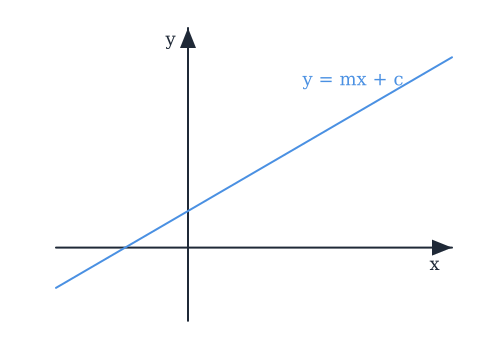
A linear function is a function whose graph is a straight line, y = mx + c. Here is what the gradient m and the y-intercept c mean, with a taxi ride as the example.
 3 min.
 What is an inequality?
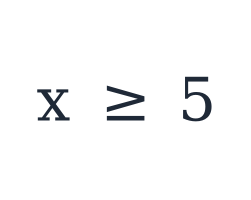
An inequality is almost the same as an equation, but instead of an equals sign it has a greater-than or less-than sign. We solve it the same way, with one small difference, and the answer is a whole range of values instead of one.
 7 min.
 The gradient of a curve: average and instantaneous rate of change
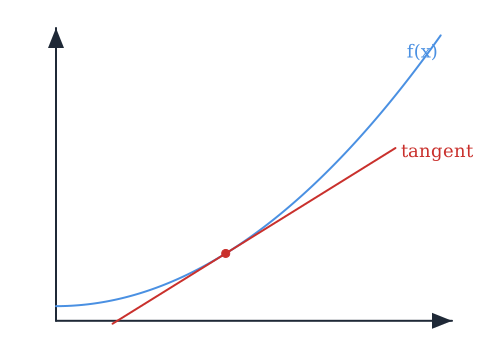
On a straight line the gradient is the same everywhere. On a curve it changes from point to point. The gradient formula between two points gives the average rate of change, and the gradient of a tangent gives the rate of change at one instant, like the needle on a speedometer.
 5 min.
 Exponential functions: growth and decay
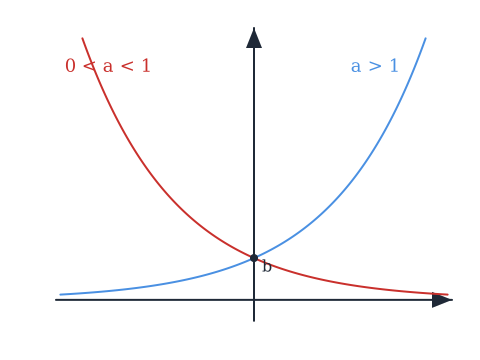
An exponential function has the equation f(x) = b × a^x, where b is the start value and a is the growth factor, a = 1 + r. Here is what the two shapes of the graph mean, when the function is not exponential at all, and why the graph never reaches zero.
 7 min.
 What is a fraction?
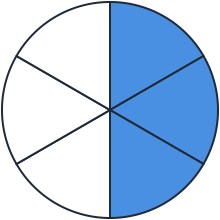
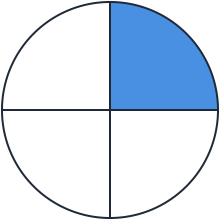
A fraction is made of three parts, a numerator, a fraction bar and a denominator, and the fraction bar is just a division sign. Here is the short explanation with examples and pizza.
 5 min.
 What are indices (powers) and roots?
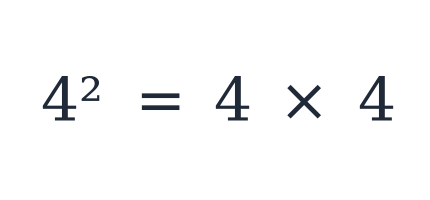
A power has two parts, a base and an index, and the index just tells you how many times to multiply the base by itself. Roots run the same thing backwards. Here is the short explanation with examples.
 3 min.
 Power functions: graphs of y = b times x to the power a
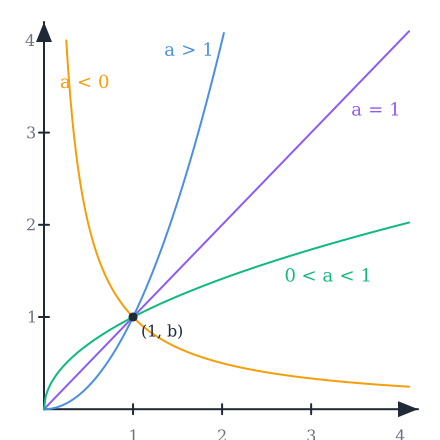
A power function has the equation f(x) = b × x^a. Unlike an exponential function, the index a stays fixed and x is the base. Here is what b and a mean and the four shapes the graph can take, which is where the cubic graph and the reciprocal graph live.
 7 min.
 Trigonometry: sine, cosine and tangent
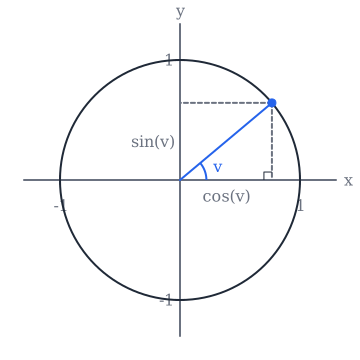
Sine and cosine are simply the coordinates of a point on the unit circle, and tangent is built from them. Once you see that, the formulas for triangles stop being things to memorise.
 4 min.
 The different types of numbers
Numbers come in groups that nest inside each other: the natural numbers, the integers, the rational numbers and the real numbers. Here is what each group contains and how each one is built from the one before.
 5 min.
 Simplifying algebraic expressions: terms and like terms
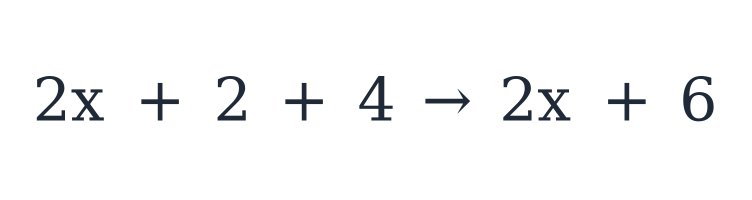
Simplifying is a way of making maths easier to get an overview of. We work out as much as we can, but we're not allowed to add apples and bananas: 2a + 3a becomes 5a, and 2a + 5 has to stay as it is.
 4 min.
 What are decimals?
A decimal is a way of writing a number that isn't whole. The digits after the decimal point are parts of a whole: tenths, then hundredths, then thousandths. Here is the short explanation with examples.
 4 min.
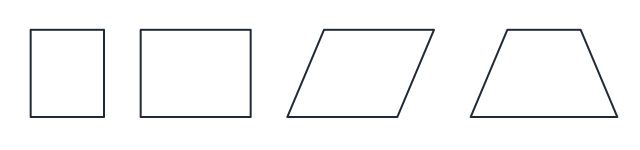
 Quadrilaterals: square, rectangle, parallelogram and trapezium
Every quadrilateral has 4 sides and an angle sum of 360 degrees. Here are the four shapes worth knowing, what makes each one different, and the area formula that goes with it.
 5 min.
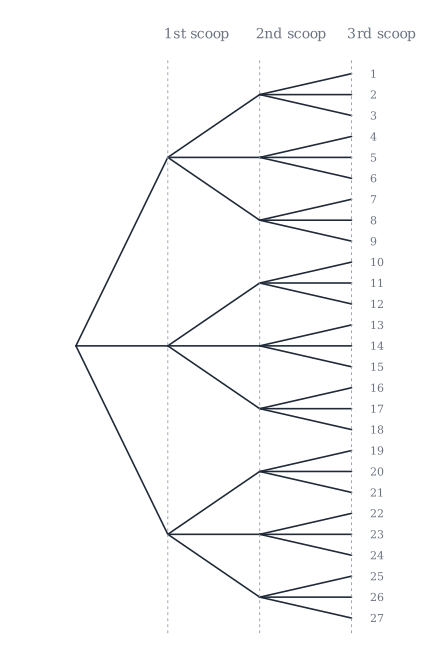
 Counting outcomes: tree diagrams and the product rule
How many ways can you combine 3 scoops of ice cream from 3 flavours? A tree diagram shows all 27. When the tree gets too big, the product rule and the factorial take over.
 5 min.
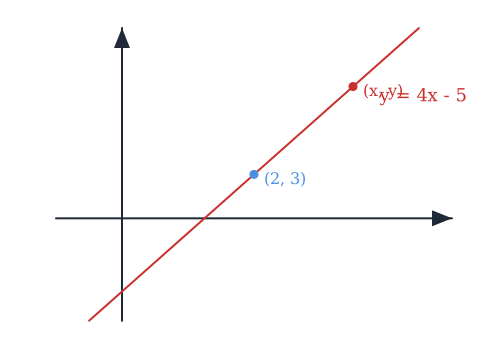
 Coordinate geometry: lines, distances and circles
Coordinate geometry is about describing figures like lines and circles with equations and coordinates. Here is the line through a point with a given gradient, the distance and midpoint between two points, parallel and perpendicular lines, and the equation of a circle.
 3 min.
 Scale and scale drawings
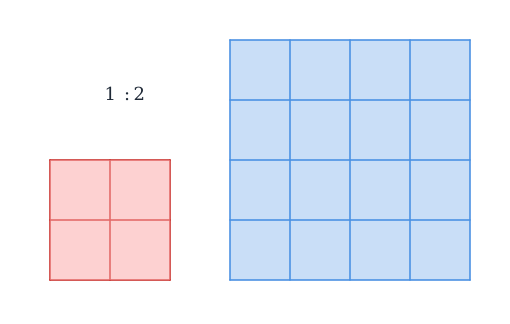
Real things are often too big for a piece of paper, so we scale them down and write the scale as 1 : x. Here is what the two numbers mean, and which one is the drawing.
 5 min.
 What is a percentage?
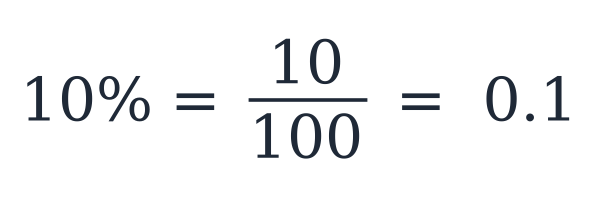
Per cent means hundredths, so every percentage is a fraction with 100 on the bottom. Here is what that means, and the four kinds of percentage question you will meet in GCSE maths.
 6 min.
 What is a function?
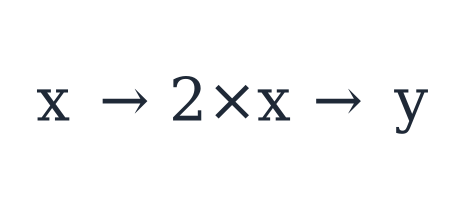
A function is like a machine in a factory. We put a number in, the machine applies its rule, and a different number comes out. That one picture carries everything else about functions.
 5 min.
 What is a vector?
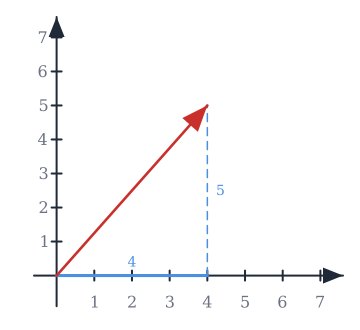
A vector is an arrow with a direction and a length. Its coordinates say how far it goes across and how far up, and two arrows with the same length and direction are the same vector, wherever they sit.
 5 min.
 Circles: radius, diameter, chord, circumference
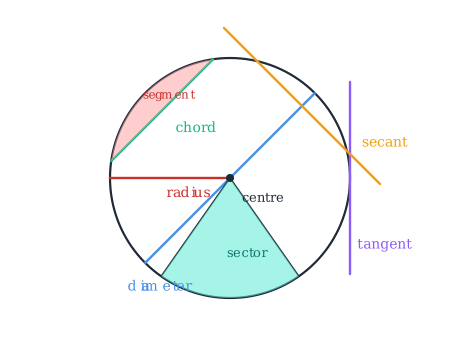
The circle is probably the simplest shape we have: round, no corners, 360 degrees all the way round. Here are the names of its parts and the two formulas you need for it.
 4 min.
 Order of operations (BIDMAS)
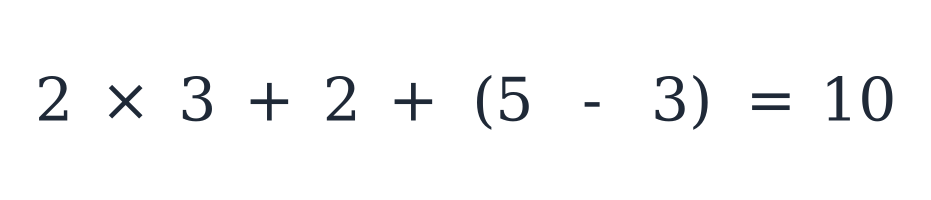
Before you can learn any maths, the basics have to be in place. The order of operations is a pyramid: brackets first, then powers and roots, then multiplying and dividing, and finally adding and subtracting.
 5 min.
 Transformations: reflection, translation and rotation
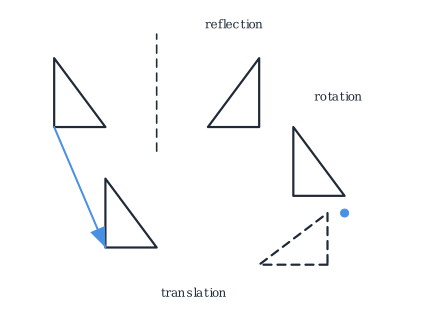
Reflection, translation and rotation are three ways of moving a figure. The figure keeps its shape every time: it is mirrored, pushed or turned, never changed.
 5 min.
 3D shapes: volume and surface area
Volume is how much fits inside a 3D shape. Surface area is how much wrapping paper you would need to cover it. Here is the catalogue of shapes and their formulas.
 7 min.
 What is an equation?
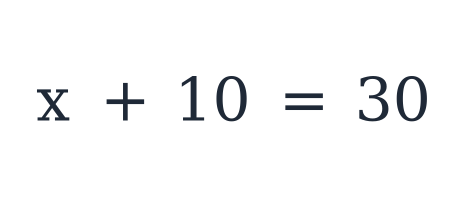
An equation is a way we can find unknown values. The equals sign says both sides are exactly the same, like a scale in balance, and solving means doing the opposite on both sides until x stands alone.
 7 min.
 Statistics: organising and describing data
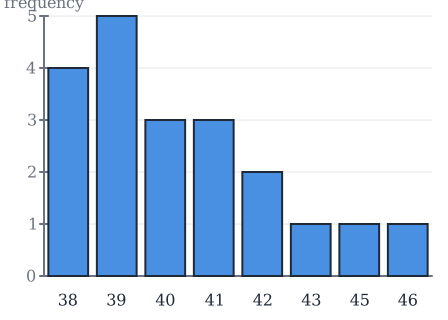
Statistics is about getting an overview of data. We collect observations, put them in a frequency table, draw them, and then describe them with a few numbers such as the mean, the median and the quartiles.
 4 min.
 Reflection in a mirror line
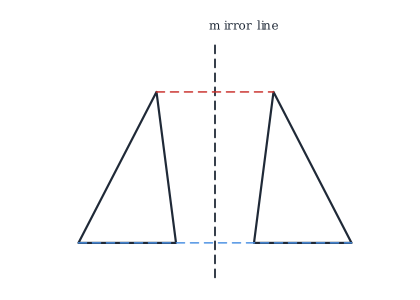
Reflecting a figure is exactly like seeing it in a real mirror. Each corner of the reflection sits just as far from the mirror line as the original corner, measured at right angles to the line.
 4 min.
 The cosine rule
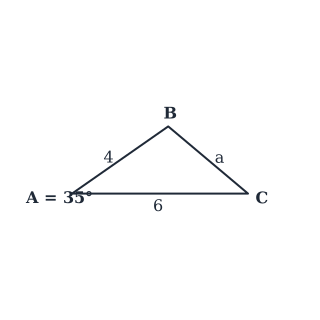
The cosine rule lets you find a side from two sides and the angle between them, or an angle from three sides, in any triangle. Here are the three versions and both worked examples from the book.
 3 min.
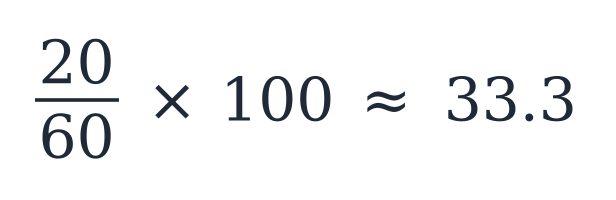
 How to write one number as a percentage of another
To find what percentage one number is of another, write the first number over the second as a fraction and multiply by 100. Here is the method with worked examples.
3 min. Bar charts
A bar chart is the frequency column of your table drawn as bars. Observations along the bottom, frequency up the side, and the tallest bar is the mode.
 5 min.
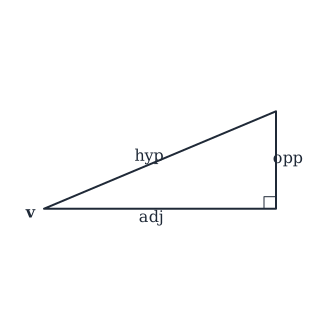
 Sin, cos and tan in right-angled triangles
The three trigonometry formulas for right-angled triangles are not three things to memorise. They are the unit circle, scaled up by the hypotenuse. Here is how the sides are named and where the formulas come from.
 5 min.
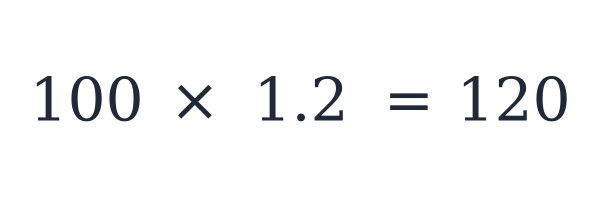
 Percentage increase and decrease with a multiplier
Adding a percentage is a multiplication by a number a bit bigger than 1, and taking a percentage off is a multiplication by a number a bit smaller than 1. Here is how, with VAT and price examples.
 3 min.
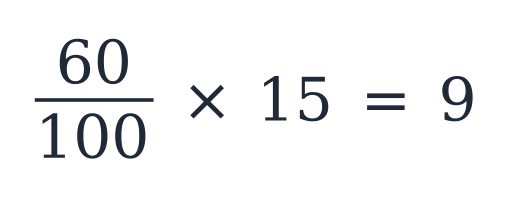
 How to find a percentage of an amount
To find a percentage of an amount, find 1% of it by dividing by 100 and then multiply by the number of per cent you want. Here is the method with worked examples.
 6 min.
 Gradient and y-intercept: what m and c mean
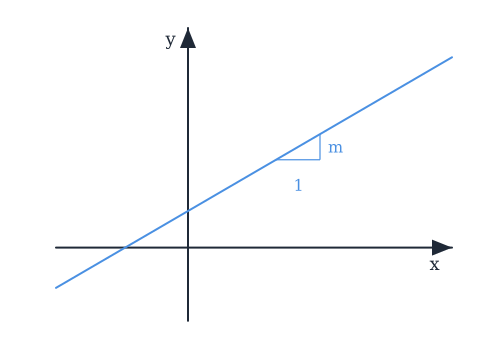
In y = mx + c the gradient m says how far the line goes up for every 1 along, and c says where it crosses the y-axis. Here is how to read both off a graph and out of a taxi fare.
 4 min.
 Simultaneous equations: the elimination method
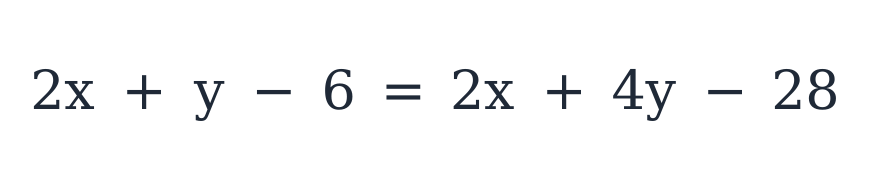
The elimination method makes the coefficients of one unknown equal in both equations, so that unknown goes out with itself and you are left with one ordinary equation to solve.
 4 min.
 Inverse functions
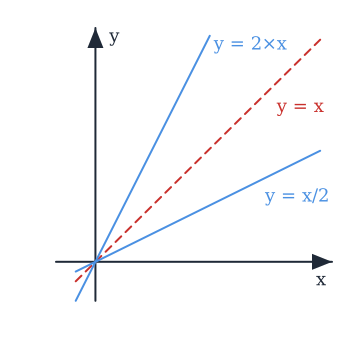
Two functions are inverse when they cancel each other out. Squaring and square root, times 2 and divide by 2, plus 10 and minus 10. Every time you get x on its own in an equation, this is what you are using.
 5 min.
 Finding the equation of a straight line from two points
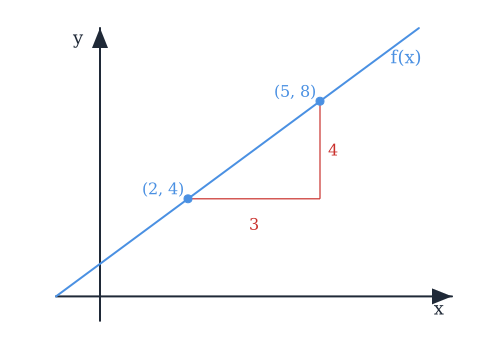
Given two points on a line, the two-point formula gives you the gradient m, and putting one point back in gives you c. Here is the whole method, and why the formula looks the way it does.
 4 min.
 Solving quadratic equations with the quadratic formula
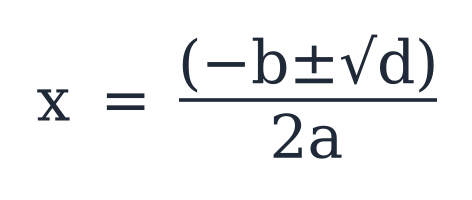
A quadratic equation ax² + bx + c = 0 is solved with one formula. Find a, b and c, put them in, and the part under the square root tells you in advance whether you get two solutions, one or none.
 3 min.
 Solving quadratic equations by factorising: the zero product rule
If a quadratic equation is written as two brackets multiplied together that equal 0, you don't need the quadratic formula. The zero product rule solves it in two lines.
 3 min.
 Exponential growth and decay
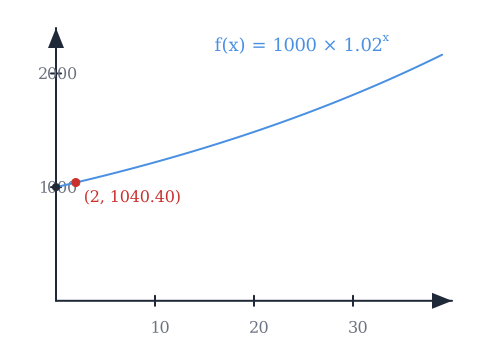
Something that grows or falls by the same percentage every step is exponential. Find the start value, turn the percentage into the growth factor a = 1 + r, and raise it to the number of steps. Worked through with money in the bank, bacteria that double, and a value that falls.
 4 min.
 How to solve linear equations
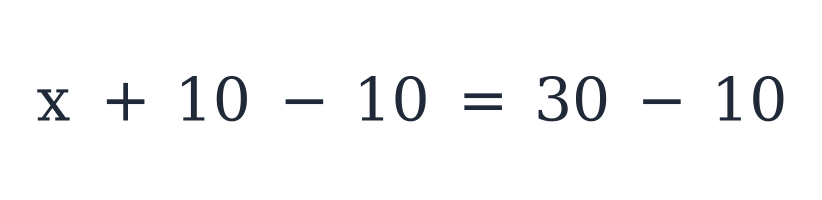
Solving an equation means getting x to stand alone. The trick is always the same: find what is in the way of x, do the opposite of it on both sides, and keep the scales balanced.
 5 min.
 Equations with the unknown on both sides
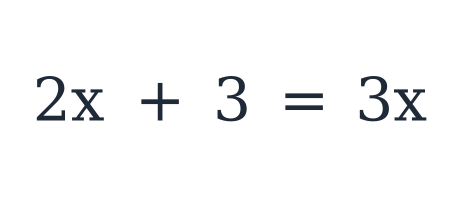
When x appears on both sides of the equals sign, we first simplify each side, then gather all the x's on one side and all the numbers on the other, and only then get x on its own.
 3 min.
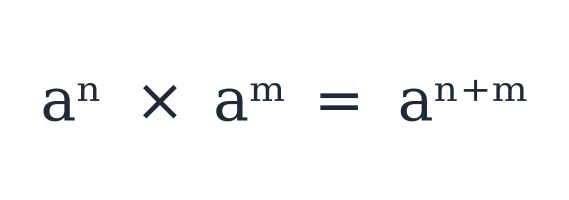
 The laws of indices
There are only a handful of rules for working with powers, and every one of them falls straight out of what a power means. Here is the full list, why each rule works, and worked examples with numbers and letters.
 4 min.
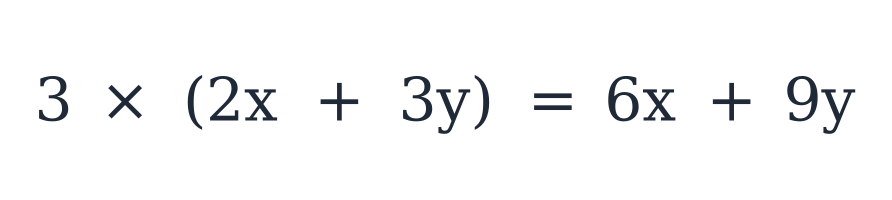
 Expanding a single bracket
The sign in front of a bracket decides how we open it. A multiplication in front means we multiply into the bracket, so 3 × (2x + 3y) = 6x + 9y. A minus in front means we flip the signs of everything inside.
 3 min.
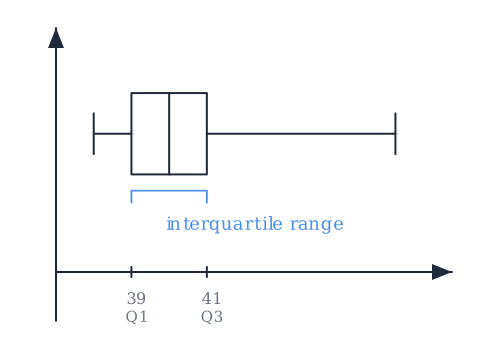
 Outliers: the 1.5 times IQR rule
An outlier is an observation that lies much further away than the rest. 'Much further away' is vague, so we make it precise with the interquartile range: anything beyond 1.5 times the IQR from the box is an outlier.
 4 min.
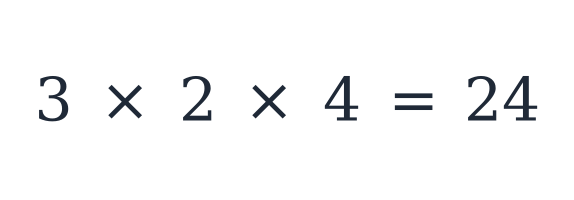
 The product rule for counting
3 kinds of bread, 2 kinds of meat, 4 kinds of cheese. Both bread and meat and cheese means multiply: 24 sandwiches. Only one item in total means add: 9 choices. That is the whole rule.
 4 min.
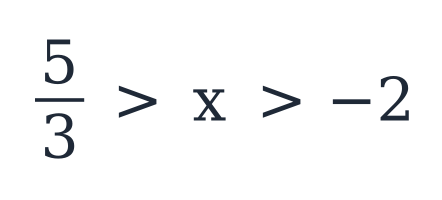
 Double inequalities
A double inequality has two inequality signs in it. We pretend it's two inequalities, solve them one at a time, and put the results back together into one answer: a range of values for x.
 4 min.
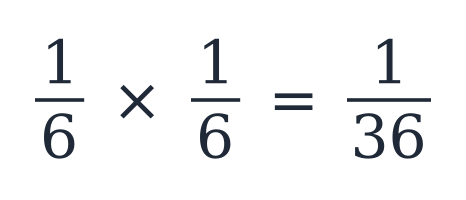
 The and rule and the or rule: multiplying and adding probabilities
First a 6 and then a 3 is a both-and situation, so we multiply. A 6 or a 3 in one roll is either-or, so we add. Read the words in the question and the rule picks itself.
 3 min.
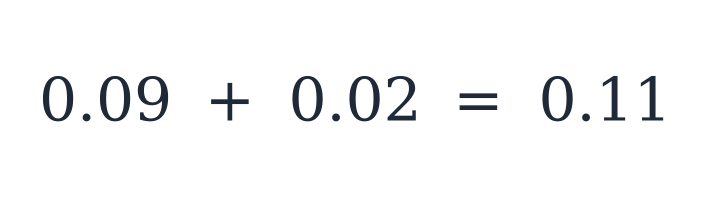
 How to add decimals
When we add decimals, we keep the different parts separate: wholes with wholes, tenths with tenths, hundredths with hundredths. Here are two worked examples, one plain and one where a place overflows.
 4 min.
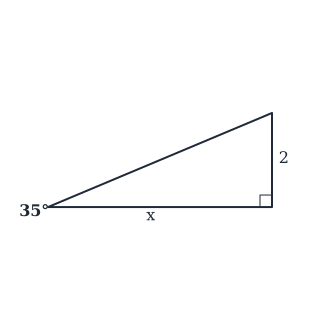
 Finding a side with trigonometry
When you know an angle and one side of a right-angled triangle, one of the three trigonometry formulas gives you another side. Here is the worked example from the book, step by step.
 3 min.
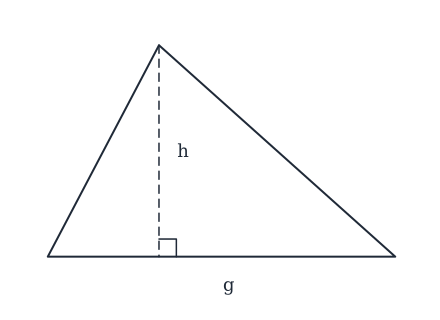
 How to find the area and perimeter of a triangle
One formula covers every triangle: half the height times the base. The only thing to get right is the height, which has to stand at a right angle to the base.
 3 min.
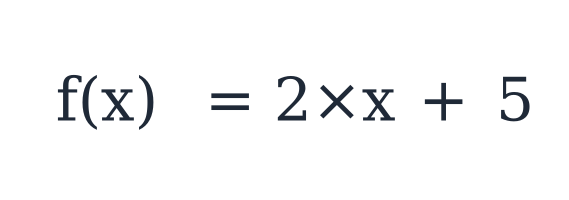
 Function notation: what f(x) means
f(x) is just another name for y. The f names the function and the bracket shows which variable it depends on, which is why f(3) is such a handy way to say the function value when x is 3.
 3 min.
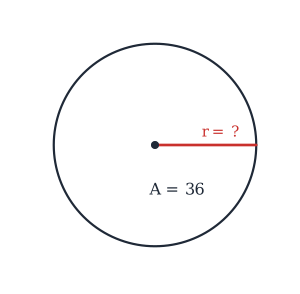
 Finding the radius of a circle from its area
The area formula only has two unknowns in it, the area and the radius, because π is just a number. So if a question gives you the area, you can work the formula backwards and find the radius.
 5 min.
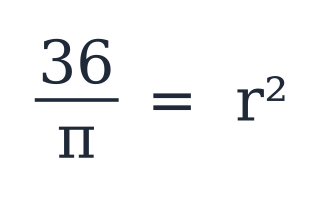
 Rearranging formulae: changing the subject
Rearranging a formula means making the letter we want the subject, with the same moves we use for any equation. That is how the formula for the area of a circle becomes a formula for its radius.
 4 min.
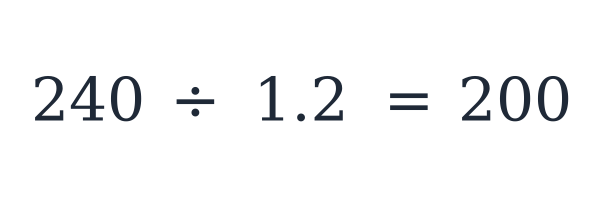
 Reverse percentages: finding the original value
A reverse percentage runs the usual question backwards: you know the result and have to find what you started with. Here are the two situations you will meet, with worked examples.
 4 min.
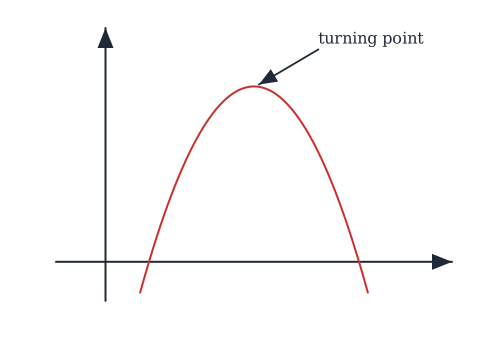
 The turning point of a parabola
The turning point is the top or bottom of the parabola, and a formula finds it straight from a, b and c. Here is the formula, why the point is where the graph turns, and a worked example.
 3 min.
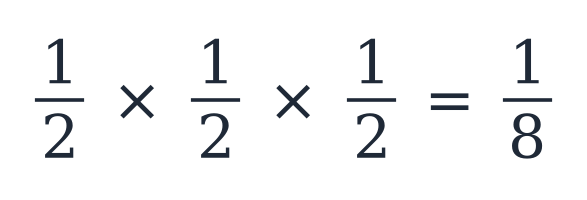
 Independent events
Two events are independent when the first has no influence on what the second becomes, like one coin toss and the next. It sounds obvious, but it decides whether you are allowed to multiply.
 4 min.
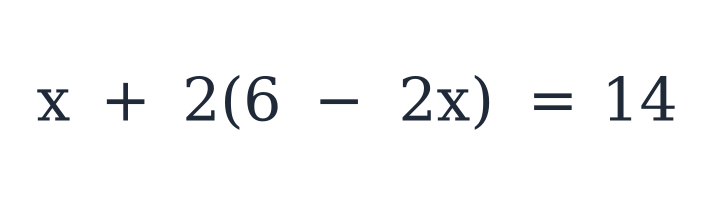
 Simultaneous equations: the substitution method
Two equations with two unknowns can be solved by substitution: get one unknown on its own in one equation, put that expression into the other equation, and you are left with one ordinary equation to solve.
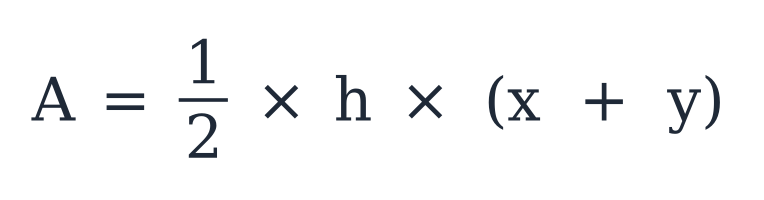 2 min.
 Area of a trapezium
The trapezium's area formula looks more complicated than it is. Add the two parallel sides together, multiply by the height, then multiply by a half.
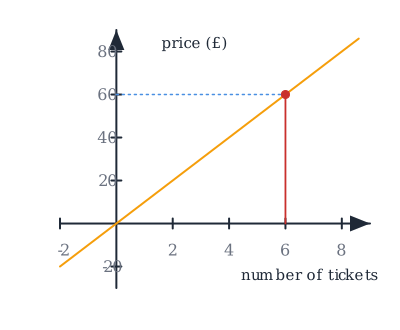 3 min.
 Dependent and independent variables
The y-value that comes out of a function depends on the x-value we put in. That gives the two variables their names, and it decides which one goes on which axis.
 4 min.
 Brackets in calculations: plus, times and minus brackets
The sign in front of a bracket decides how you open it. A plus changes nothing, a times multiplies into every term, and a minus flips every sign inside. Here is why, with the invisible times 1 that explains the flip.
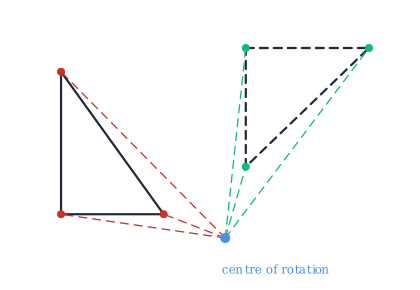 3 min.
 Rotation about a centre
Rotating a figure means turning it round a centre of rotation. The figure keeps its shape. You turn each corner the given angle round the centre, then join the new corners up.
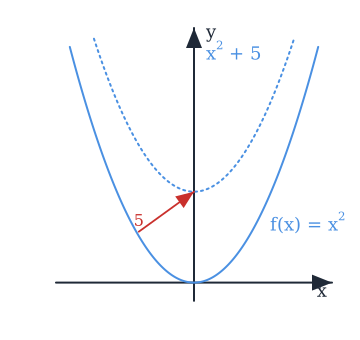 5 min.
 Translating graphs: f(x) + k and f(x − k)
There are two ways to translate a graph: up the y-axis or along the x-axis. Up is easy, you add to the function. Sideways is the one that catches people, because moving right means subtracting from x.
 3 min.
 Simplifying surds
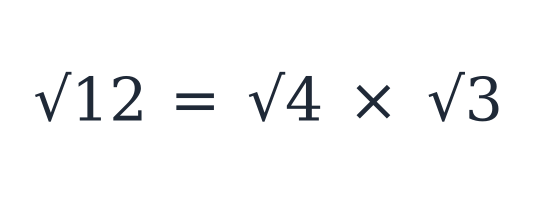
A surd is a root that doesn't come out as a whole number. We can't write it as a neat number, but we can often write it more neatly, using one rule for roots and a square number that divides in.
 3 min.
 Composite functions
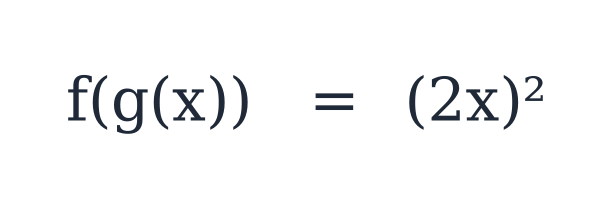
Composite functions are exactly what the name says: we put one function into another. Take the whole of g(x) and put it in x's place in f(x), and you have f(g(x)).
 3 min.
 Volume of a frustum (truncated cone and pyramid)
A frustum is a cone or a pyramid with the top cut off. Both have a volume formula that uses the height and the two ends, and both are rarely asked about.
 4 min.
 Midpoint and distance between two points
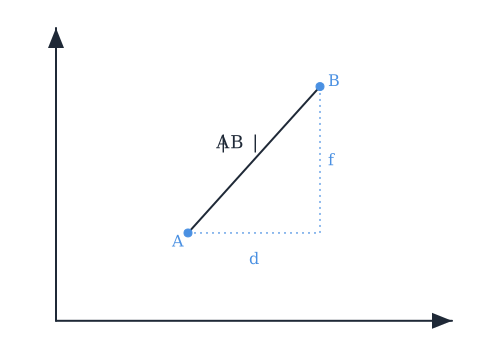
The distance between two points is the hypotenuse of a right-angled triangle, so the distance formula is just Pythagoras. The midpoint is a kind of average of the coordinates. Both, worked through step by step.
 3 min.
 Area of a parallelogram
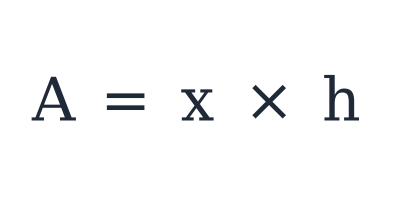
A parallelogram is a rectangle that has been given a shove on the side. The shove doesn't change the area, but it does mean you multiply base by height, not side by side.
 4 min.
 How to add fractions
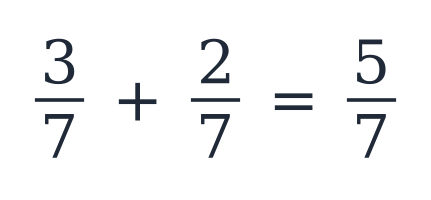
Adding fractions is easy when the denominators are the same. When they're different, we first scale the fractions up to a common denominator, and then we add the numerators. Here is the whole move with examples.
 3 min.
 Pythagoras' theorem: finding a shorter side
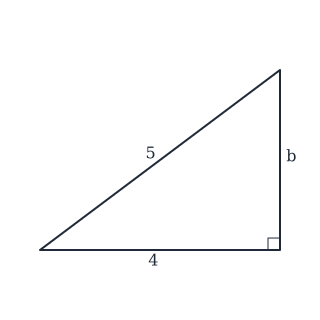
Sometimes you know the hypotenuse and one shorter side, and it is the other shorter side you are missing. Then you rearrange Pythagoras' theorem for it first, exactly like getting x on its own in an equation.
 3 min.
 Solving equations with a graph
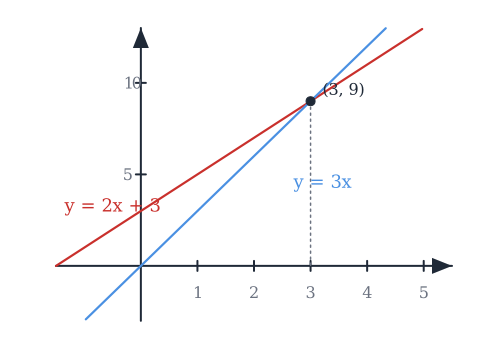
An equation can be solved with a graph. We split it at the equals sign into two lines, draw both, and the x-value of the point where they cross is the solution. If they never cross, there is no solution.
 4 min.
 Terms in an equation: what is a term?
An equation is split up into terms, separated by plus and minus. Knowing where one term stops and the next begins, and that the sign belongs to the term, is what lets you simplify safely.
 5 min.
 How to make a frequency table
A frequency table turns a pile of observations into a few columns you can read everything off. We build one for 20 shoe sizes, one column at a time.
 4 min.
 How to solve linear inequalities
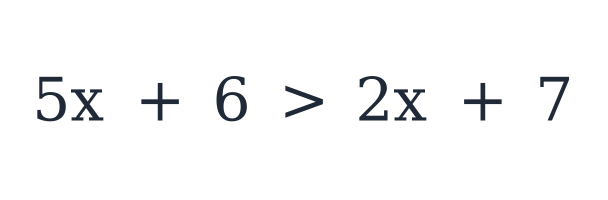
We solve an inequality the same way we solve an equation: do the opposite on both sides until x stands alone. 5x + 6 > 2x + 7 becomes x > 1/3. The only new rule is that the sign flips when we multiply or divide by a negative number.
 3 min.
 Collecting like terms
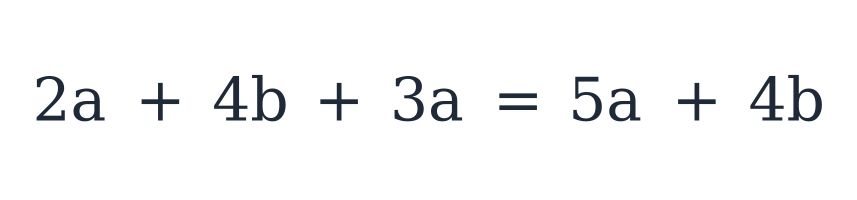
Collecting like terms is how we simplify an expression: we add together the terms that are the same kind of thing and leave the rest alone. 2a + 4b + 3a becomes 5a + 4b, and 2a + 5 stays exactly as it is.
 3 min.
 Volume of a pyramid
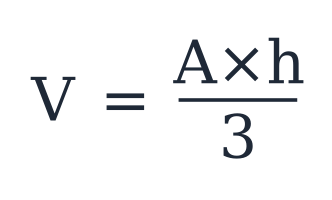
The volume of a pyramid is the area of the base times the height, divided by 3. The base can be a triangle, a quadrilateral or a pentagon, the formula is the same.
 3 min.
 Decimal place value: tenths, hundredths and thousandths
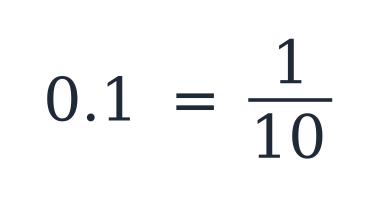
Every digit after the decimal point has its own place and its own value. The first is tenths, the second hundredths, the third thousandths. Here is how to read them, and why you must never mix them up.
 3 min.
 Volume and surface area of a cylinder
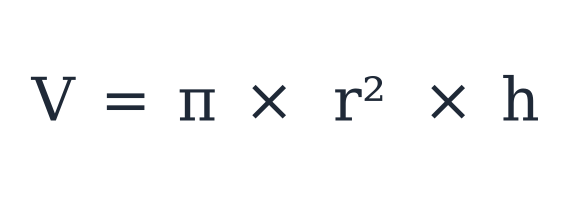
The volume of a cylinder is the area of the circle at the bottom multiplied by how tall the cylinder is. The surface area is the curved tube plus the circle at the top and the bottom.
 6 min.
 The equation of a circle
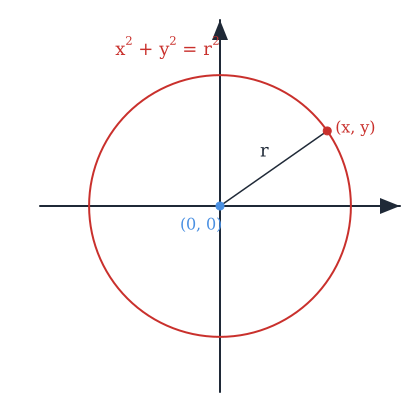
A circle is all the points that sit the same distance, the radius, from the centre. Put that into Pythagoras and you get the equation of a circle. Here is where it comes from, the GCSE case with the centre at the origin, and how to read the centre and radius off an equation.
 4 min.
 Expanding double brackets
Two brackets multiplied together are opened by multiplying everything in the one bracket with everything in the other. (x + 1)(x − 2) gives x² − 2x + x − 2, which simplifies to x² − x − 2.
 4 min.
 Tree diagrams in probability
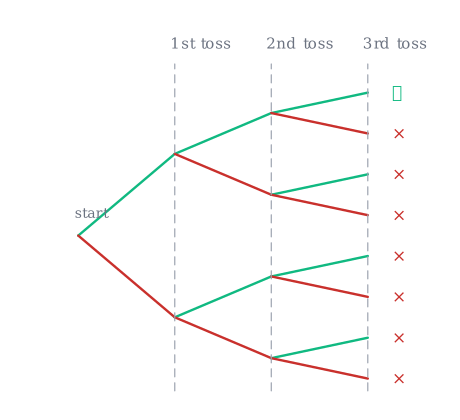
A tree diagram draws every way a situation can turn out, one toss at a time. Then you count the paths you want against all the paths. Here it is for a coin tossed 3 times.
 5 min.
 Cumulative frequency graphs
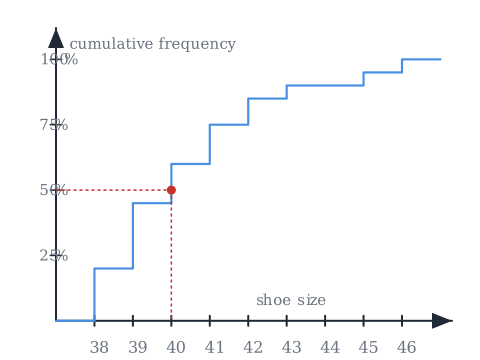
A cumulative frequency graph shows how many per cent of the observations lie at or below each value. Find 50% on the y-axis, go across to the curve, drop down, and you've read the median.
 4 min.
 Equivalent fractions: scaling up and simplifying
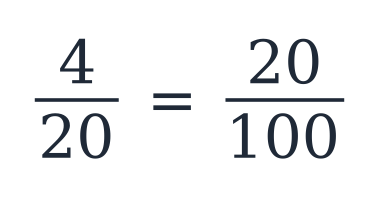
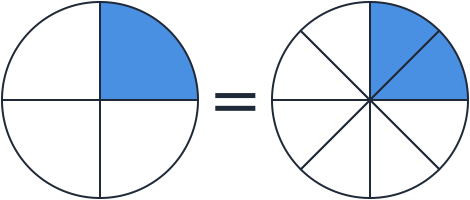
Two fractions can look different and still be the same number. We get from one to the other by multiplying or dividing both the numerator and the denominator by the same number. Here is how, and why it works.
 3 min.
 How to find the area of a circle
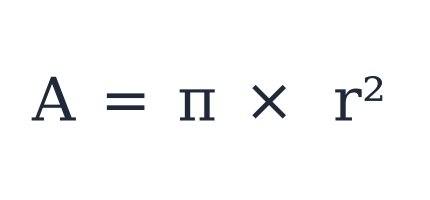
The area of a circle is π times the radius squared. It is one formula, and the only thing to keep straight is that it wants the radius, not the diameter.
 4 min.
 Simplifying both sides of an equation before you solve it
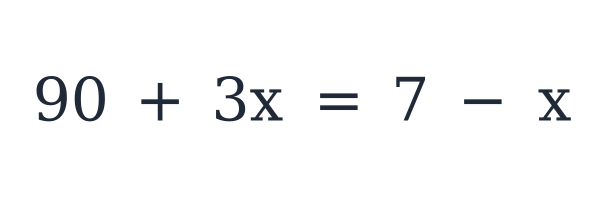
Simplifying is a good tool for getting an overview of the long equations we work with. Collect the x's on each side, then the numbers, and 2x + 45 × 2 − 2x + 3x = −4x + 5 × 2 − 3 + 3x collapses to 90 + 3x = 7 − x.
 3 min.
 Volume and surface area of a cone
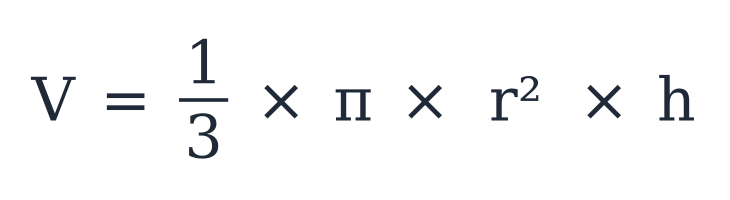
To find the volume of a cone you need the height and the radius of the circle at the bottom. For the surface area you also need the length of the side of the cone.
 3 min.
 Fractions, decimals and percentages: the same number in three forms
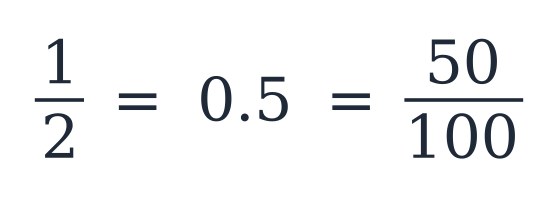
A half can be written as 1/2, as 0.5 or as 50%. They look different, but they're the same number. This guide shows how the three forms connect and gives the conversions worth knowing by heart.
 5 min.
 Factorising quadratics: the factorised form
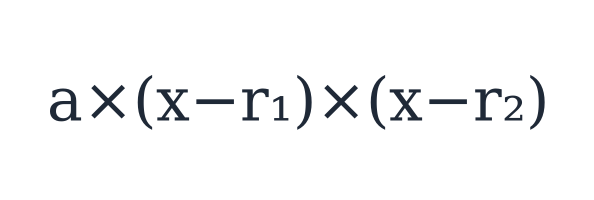
A quadratic can be written with brackets as a(x − r₁)(x − r₂), the factorised form. It is the same function as ax² + bx + c, but the roots are sitting right there in the brackets.
 3 min.
 Volume and surface area of a cuboid
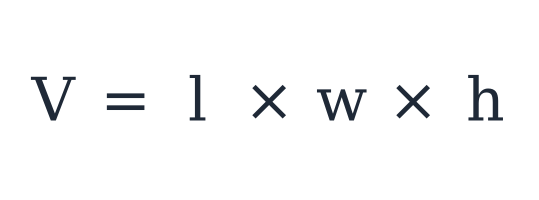
The volume of a cuboid is the height, length and width multiplied together. The surface area is the area of all its sides added up, as if you were wrapping the box in paper.
 3 min.
 How to use a map scale
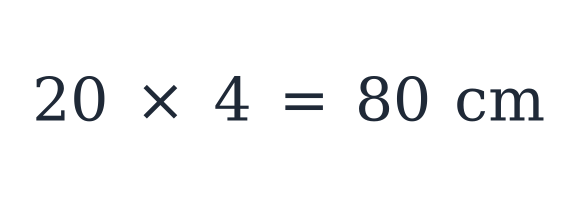
A scale like 1 : 20 says that 1 cm on the paper is 20 cm in reality. To get from a length on the map to the real length, you multiply. The only thing that trips people up is the direction.
 4 min.
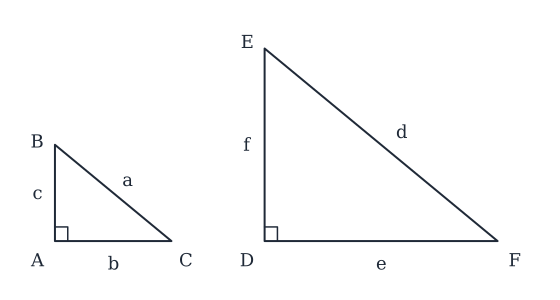
 Similar triangles and the ratio of their sides
Two triangles with the same angles are the same shape, just scaled. That gives you one ratio for all their sides, and with it you can find any side you're missing.
 3 min.
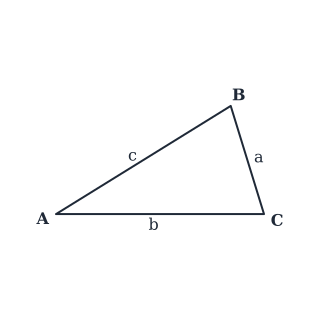
 The sine rule
The sine rule links each side of a triangle to the angle opposite it, and it works on every triangle there is. Here is what it says, what you need to know to use it, and a worked example.
 4 min.
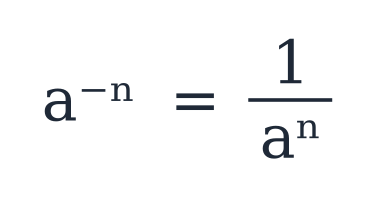
 Zero, negative and fractional indices
Multiply a number by itself zero times, or minus two times, or half a time? It sounds odd, but the laws of indices tell us exactly what those powers have to mean. Here is the argument and the worked examples.
 3 min.
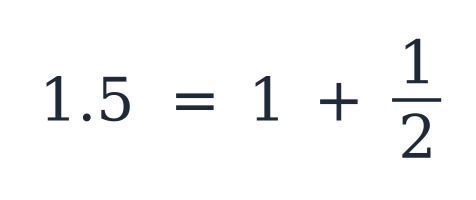
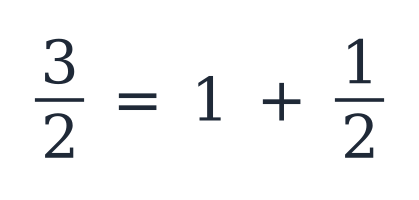
 Fractions and whole numbers
Whole numbers and fractions are not two different kinds of number. A whole number can always be written as a fraction with 1 as the denominator, and a fraction like 3/2 can be split into 1 + 1/2.
 3 min.
 How to divide fractions
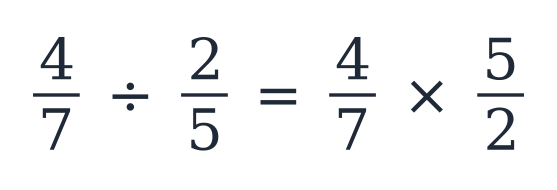
When we divide by a fraction, there's a little trick: we turn the last fraction upside down and multiply instead. It sounds strange, but it turns division into multiplication, which we already know how to do.
 4 min.
 Direct proportion
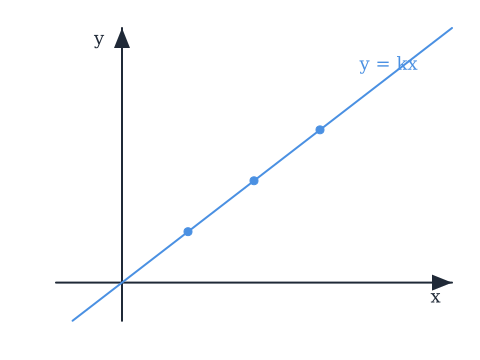
Direct proportion has the form y = kx: when x goes up, y goes up by a constant. Here is what k means, how to find it from one pair of values, and how the milk price example works.
2 min. Volume and surface area of a sphere
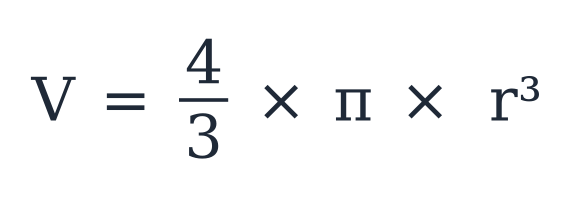
A sphere only has one length, the radius, and that is all you need. The volume is four thirds times pi times the radius cubed, and the surface area is four times pi times the radius squared.
 4 min.
 Scatter graphs and the line of best fit (linear regression)
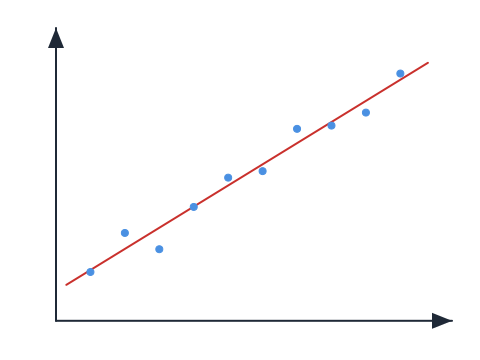
A line of best fit is the straight line that describes a scatter of points as well as possible. Here is what it is for, how to judge how well it fits, and when a straight line is the wrong choice.
 3 min.
 Coordinates and the coordinate system
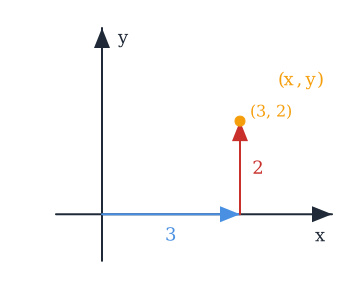
The coordinate system is the canvas we draw functions on. A point is described by how far we go along the x-axis and then up the y-axis, written as (x, y).
 3 min.
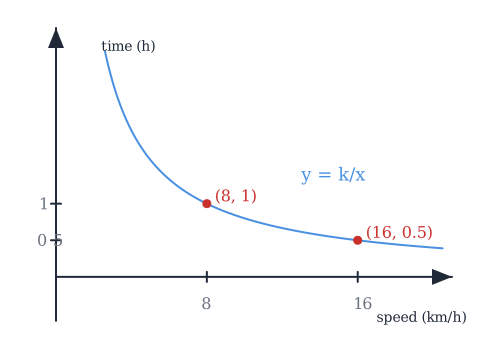
 Inverse proportion
Inverse proportion has the form y = k/x: when x goes up, y comes down. Here is what that means, the other forms it can take, and how to find k from a running example.
 3 min.
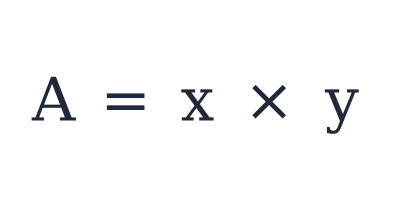
 Area of a square and a rectangle
For a square and a rectangle the area is the two side lengths multiplied together. The square just happens to have the same length twice.
 5 min.
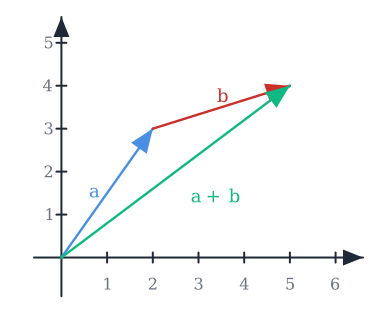
 Adding, subtracting and scaling vectors
We often need to add vectors, subtract them or multiply a vector by a number. With the coordinates it's just normal arithmetic. Drawn on paper it looks a little different, and that is the part worth understanding.
 4 min.
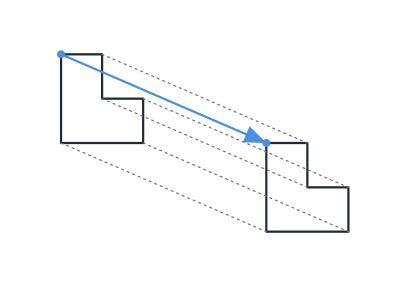
 Translation: moving a shape with a vector
Translating a figure means pushing it to a new place without turning it. Every corner moves the same way, so the arrow from one corner to its new place, a vector, describes the whole move.
 4 min.
 Mean, median, mode and range
The mean, the median, the mode and the range each describe a data set in one number. We find all four for 20 shoe sizes and see what each one tells us.
 4 min.
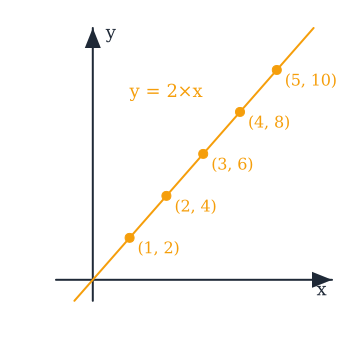
 How to plot the graph of an equation
Every x-value we put into a function gives us a point. Plot a handful of them, draw the line through them, and you have the graph. Here is the method with y = 2x and a real-life example.
 4 min.
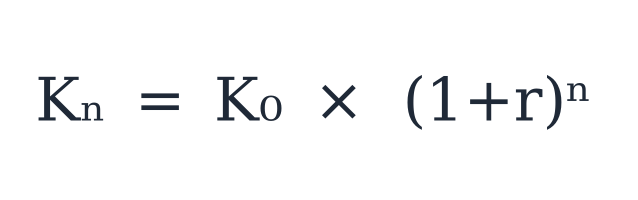
 Compound interest: the interest formula
The interest formula tells you how much money you have after a number of years at a given rate of interest. Here is what each letter means, why we multiply by 1.02 and not 0.02, and two worked examples.
 4 min.
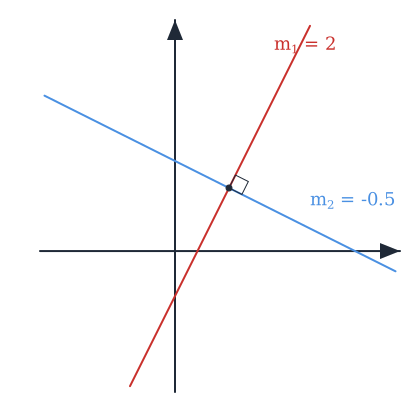
 Parallel and perpendicular lines
Parallel lines have the same gradient, so they never cross. Perpendicular lines cross at a right angle, and their gradients multiply to -1. Here is how to check both from y = mx + c, and how to use the rule when you have to find a line yourself.
 3 min.
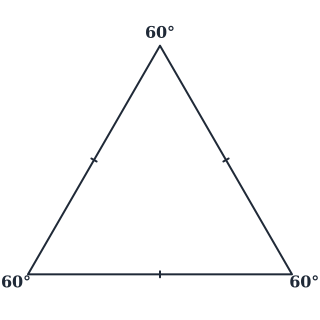
 The angles in a triangle add up to 180 degrees
Three corners, three angles, and together they always make 180 degrees. Once you know that, a missing angle in a triangle is just a subtraction.
 5 min.
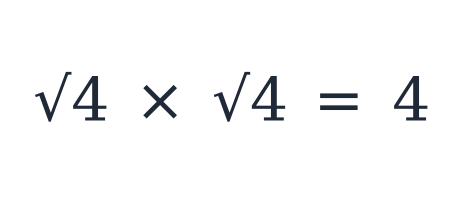
 Square roots and cube roots
The square root of a number is the number you multiply by itself to get it, and the cube root is the same idea three times over. Roots are the opposite of powers, which is exactly why they're so useful in equations.
 5 min.
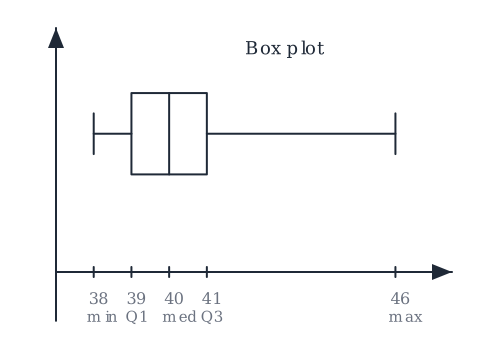
 Quartiles, interquartile range and box plots
The quartiles split a sorted data set at 25%, 50% and 75%. Put them together with the smallest and largest value and you can draw a box plot, the quickest overview of a data set there is.
 3 min.
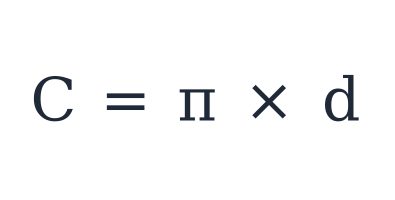
 How to find the circumference of a circle
The circumference is π times the diameter. If you've only got the radius, you double it first, because the diameter is twice as long as the radius.
 4 min.
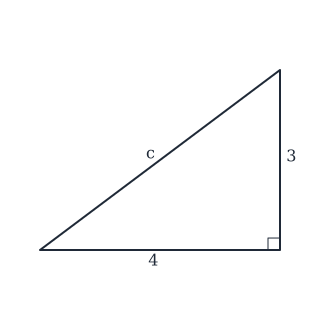
 Pythagoras' theorem: finding the hypotenuse
When you know the two shorter sides of a right-angled triangle, Pythagoras' theorem gives you the hypotenuse. Insert the values, add the squares, and remember the square root at the end.
 3 min.
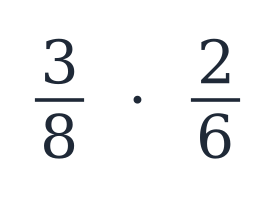
 How to multiply fractions
Multiplying two fractions is the simplest operation there is for fractions, simpler than adding. We multiply numerator by numerator and denominator by denominator, and simplify at the end.
 3 min.
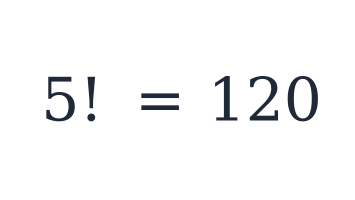
 What is a factorial?
A factorial is a short way of writing a long chain of multiplications down to 1. Five children in a row can stand in 5 × 4 × 3 × 2 × 1 = 120 ways, and we write that as 5!.
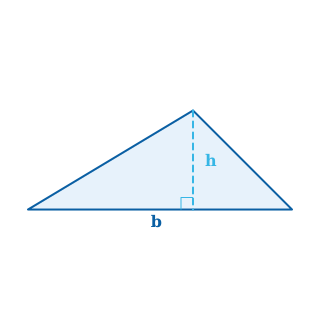 A = ½ · b · h
Triangle area
Type in your numbers and get the result straight away.
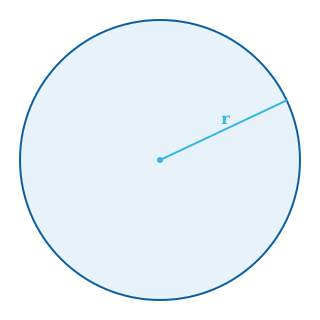 A = π · r²
Circle area
Type in your numbers and get the result straight away.
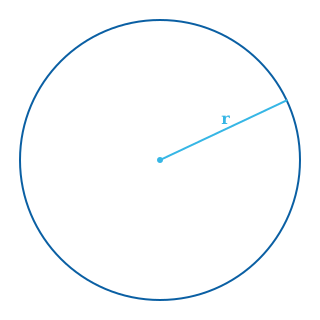 O = 2 · π · r
Circle circumference
Type in your numbers and get the result straight away.
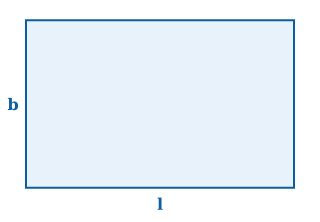 A = l · b
Rectangle area
Type in your numbers and get the result straight away.
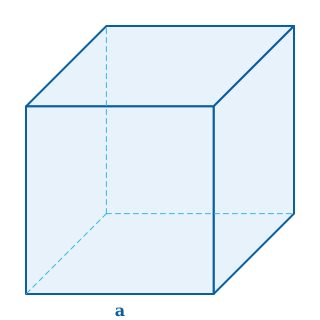 V = a³
Cube volume
Type in your numbers and get the result straight away.
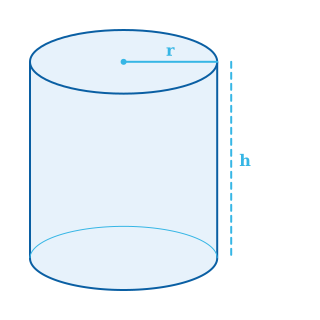 V = π · r² · h
Cylinder volume
Type in your numbers and get the result straight away.


© 2026 Matmedlassen ApS