Guide
The and rule and the or rule: multiplying and adding probabilities
First a 6 and then a 3 is a both-and situation, so we multiply. A 6 or a 3 in one roll is either-or, so we add. Read the words in the question and the rule picks itself.
There are two rules for combining probabilities: we multiply in both-and situations and we add in either-or situations. The hurdle isn't the arithmetic, it's knowing which of the two you're in, and the trick is that the question itself tells you.
When do I use this?
As we saw in What is probability?, some events have the same probability for every outcome. We saw that with the dice, where there is an equal chance of every side. When that's the case, we call it symmetric probability, and then two rules apply that we use to find the probability of different things. We call them the multiplication rule and the addition rule. In the exam you'll usually see them called the and rule and the or rule, which is a good name, because the words and and or are exactly what you look for.
The multiplication rule: both-and
When we have situations that we call both-and, we use the multiplication rule. That's when, for example with dice, we want to work out the probability that we first get a 6 and then a 3. The multiplication rule simply says that we multiply the probabilities of the separate events together. In the example with the dice there would first be a chance of rolling a 6, and then a chance of rolling a 3. So we find the chance of first rolling a 6 and then rolling a 3 by saying
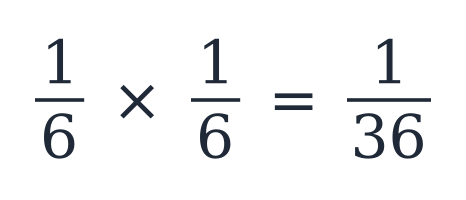
So we use the multiplication rule when we want several events to happen in a row. Both-and situations.
Scaling it up: five 6s in a row
What if we now roll 5 dice and want to work out the probability that they all come up 6? Here we simply multiply the probability of getting a 6 on all the dice together:
Five things in a row, five fractions multiplied. If you want the multiplying itself refreshed, it's in the guide about how to multiply fractions.
We can only use this multiplication rule when the probabilities are independent of each other, that is, when the first roll has no influence on the second.
The addition rule: either-or
We use the addition rule when we have situations that are either-or. It could be that we want to work out the probability of getting either a 6 or a 3 when we roll a dice. Here we have to use the addition rule, which we do by adding the probabilities together:
So there is a chance of getting either a 6 or a 3 when we roll a dice. Notice that it's one roll, and we're happy with either result. That's what makes it either-or.
How to decide: read the words
When you get questions about probability, it's a good idea just to look for whether the situation is both-and or either-or. Once you have found that out, you can simply use either the multiplication rule or the addition rule.
- First a 6 and then a 3, two rolls, both have to happen: both-and, multiply, .
- A 6 or a 3, one roll, either will do: either-or, add, .
The same both-and and either-or reading is used for counting how many ways things can be put together, in the guide about the product rule for counting. It's the same idea wearing different clothes.
Common mistakes
- "A 6 twice in a row is ." That's the classic mistake. Two rolls that both have to come up 6 is both-and, so we multiply: . Adding gives you the answer to a different question, a 6 or something else in one roll.
- "I can always multiply." The multiplication rule is only for both-and situations, and only when the events are independent of each other. Either-or situations use the addition rule.
- "I forgot to check for independence." Even though it seems simple, it's important to judge whether the events depend on each other before you multiply. See independent events.
Related
The multiplication rule is what the tree diagram does branch by branch, and the whole topic starts in What is probability?.
Frequently asked questions
Read next
Want to get good at maths?
Mathara explains every topic step by step with videos, exercises and personal feedback.
👉 Get started for free