Guide
Independent events
Two events are independent when the first has no influence on what the second becomes, like one coin toss and the next. It sounds obvious, but it decides whether you are allowed to multiply.
Two events are independent when the first one has no influence on what the second one becomes. The hurdle here isn't the calculation, it's that the idea feels so obvious that people skip it, and then multiply probabilities in a situation where they weren't allowed to.
When do I use this?
Every time we want the probability of several things happening in a row, we have to judge, before we do anything else, whether the events depend on each other. That judgement decides whether the multiplication rule from the guide about the and rule and the or rule may be used at all. So this guide comes first, and the multiplying comes second.
What independent events are
Let's look back at the examples from What is probability?. In the example with the coin tossed 3 times, each toss was independent of the toss before. That is, the first toss has no influence on what the second toss becomes. The coin doesn't know what it showed last time. That's what we call independent events.
The same goes for the dice. When we roll a dice several times, each roll is independent of the roll before it. The probability of a 6 is on the first roll, and it's still on the second roll, no matter what the first roll showed.
Why it matters: the multiplication rule needs it
The reason we care is that we can only use the multiplication rule when the probabilities are independent of each other. Three heads in a row is
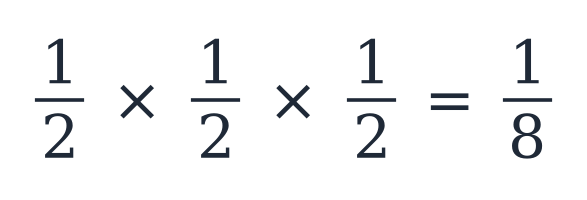
and that only works because the second toss is still a chance of heads whatever the first toss was. If the first event changed the chances in the second, the numbers we multiply wouldn't be right any more, and the multiplication rule would not apply.
Even though it seems simple, it's important, when you work out probabilities, to judge whether the events depend on each other. It's a one-second check, and it's the check that decides whether the rest of your working is valid.
How to check
Ask one question: does the outcome of the first event change the chances in the second event?
- A coin toss followed by another coin toss: no, the second toss is still heads or tails, each. Independent.
- A dice roll followed by another dice roll: no, every side is still . Independent.
If the answer is no, the events are independent and you may multiply. If the answer is yes, the events depend on each other, and the multiplication rule as we use it here does not apply.
Common mistakes
- "Independence is obvious, so I don't need to think about it." Even though it seems simple, it's important to judge whether the events depend on each other. Skipping the check is how the multiplication rule gets used where it isn't allowed.
- "I can multiply the probabilities whatever the situation." We can only use the multiplication rule when the probabilities are independent of each other. If one event changes the chances in the next, the numbers you would multiply are not the right ones.
Related
The multiplying itself, both-and versus either-or, is in the and rule and the or rule. The picture of the three tosses is the tree in tree diagrams in probability. Everything sits on What is probability?.
Frequently asked questions
Read next
Want to get good at maths?
Mathara explains every topic step by step with videos, exercises and personal feedback.
👉 Get started for free